Tag: german

Trixie Trainwreck – Horst With No Name – Columbian Neckties – Les Yeux d’la Tête

Hafenklang, 17.01.2103: Trixie Trainwreck, Horst with no Name, Columbian Neckties, Les Yeux d’la Tête

I’ll lay my cards on the table right away. I’m no fan of one man bands. Sometimes billed as “Solo singer-songwriters”, as far as I’m concerned anyone with an acoustic guitar and a self operated percussion section belongs on a busy street corner or in a metro underpass. Not on the stage in a bar, demanding a covercharge. There, I’ve made a clean breast of it. Disagree if you like. Read on if you dare.

The evening’s entertainment began upstairs in Hafenklang’s non-smoking-in-name-only room, with Trixie Trainwreck’s solo show, “No-Man-Band”. Ms Trainwreck, an American like so many others living in Berlin, has some musical history, with a past in both the Runaway Brides and Kamikaze Queens. In her solo guise, her vaguely rockabilly / country influenced folk-songs seem to take cues from such artists as Tammy Wynette, Patsy Cline and maybe even Arlo Guthrie. Somehow she managed to distil the most boring aspects of all these and more into one giant yawn. To my ears the songs lacked energy and variety, and despite her garish tattoos, Ms Trainwreck lacked colour. The room gradually filled up, but it soon became clear that most people had come to see the Hamburg boy Horst with No Name.

Horst Schneider, guitarist and singer with Hamburg rockabilly/surf/rocknroll outfit Helldriver brought out his solo stuff for his fanclub. Schneider isn’t too bad a songwriter, sometimes verging on the quite good area of the songwriting spectrum, and he crosses through rockabilly, country, rhythm and blues and even Motown influences with alacrity. Unfortunately, as I have already stated, I’m no fan of the one-man-band set-up. I think Schneider works well with the other guys from Helldriver, but his solo show lacked depth and, well, soul. That said, there were a large number of Hamburg hipsters there to see him play and clearly they enjoyed his performance though they were far too cool to move even their necks in time with the music. They packed the room and stood on their hindlegs and barked and wagged their little tails to see such fun!

Meanwhile, downstairs, Paris gypsy swing / chanson / punky outfit Les Yeux d’la Tête were warming up the Hamburg crowd. The six-piece from the Seine, from the musical milieu which produced Les Hurlements d’Léo or Les Ogres de Barback, had the room packed and jumping. Combining accordion, double bass, sax, percussion and guitars, they moved from ballad to balls-out and back again without missing a beat, and took the crowd along for the ride. This sextet of Parisian pretty-boys rode into Hamburg to sell a heady concoction of Balkan beats, solid riffs, seductive rhythms and the language of love – and had Hamburg’s young Francophiles frotting up against each other, drooling for a lick of the elixir. Too heady a cocktail, perhaps. They wanted a Daiquiri but instead got a Mai-Tai. Like Eskimos can’t hold their liquor, Germans just don’t know when too much love is enough. A swiftly placed headbutt was necessary at one stage, just as a polite reminder that ff you don’t know me, rubbing your sweaty body up and down against me is probably a bad idea!


To finish the evening, we headed back upstairs to see the Danish garage punk outfit Columbian Neckties. The group was apparently added to the bill at the last minute, I suspect to make the entry price worth paying! These are four Danes out of Aalborg who really know how to rock! With a sound that could be compared to legendary Australian punkrockers The Saints, the Columbian Neckties are one of the hottest topics in the punkrock blogosphere. The room had emptied out considerably after Horst With No Name finished up, and now there was actually room to move and one or two people were actually moving. These guys have energy above image and combine hardshredded guitar with solid stickwork and chunky bass lines. Then there’s the singer – a man with real guts! Some would say there are people who shouldn’t be allowed to go shirtless in public, but this guy raises the middle finger and lets it all hang out. And he moves the mountain! I don’t know the names of any of their songs, but for me they were the highlight of the night. None of them are pretty, they were all badly dressed as only Danes or Germans know how, but in the entertainment stakes, these guys were the evening’s highlight.

For more videos of these and other bands check out the ZASPH! YouTube channel

© CCC
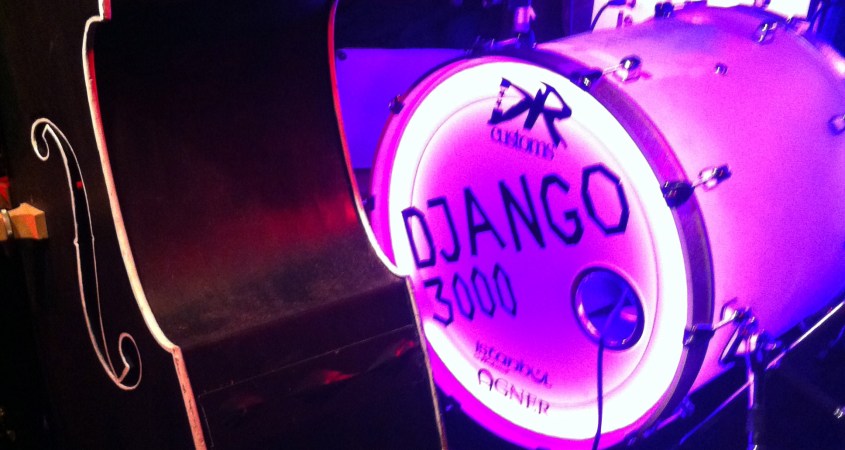
Django 3000 play Astra Stube Hamburg

The Astra Stube hadn’t grown since the last time your indomitable Zasph correspondents ventured through the doors of this sweaty broom cupboard nestled under one of Hamburg’s iron railway bridges. This bar, only a few hundred meters away from the trendy shiny-people’s scene that is the Sternschanze, is as gritty and claustrophobic and real as the Sternschanze is not, although the odd morcel of forced laughter and flash of perfect teeth do manage to make an appearance here.

     Despite its size, Astra Stube really puts on some quality acts and this night was no exception.

Django 3000
Django 3000 © Ze Sikret Skvirel (Zasph!)

     For those who’ve never heard of Django 3000, let me paint a picture. This four piece combo from Germany’s deep south combine Klezmer, ska, psychobilly, Russian folk and punk. Then they top off this heady mixture by singing in Bayrisch, the dialect commonly spoken in Bavaria.

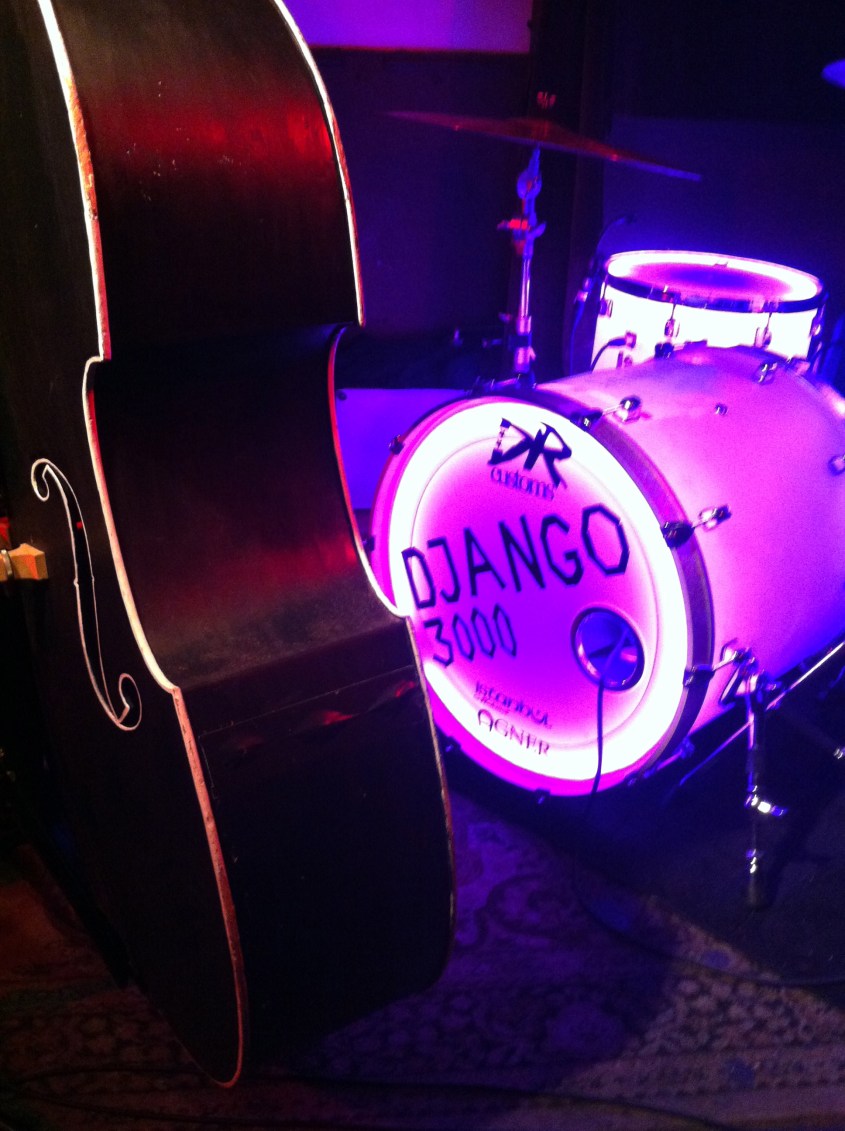
     A large bearded man with tattoos and a perky waxed moustache plays the sweetest gypsy violin you’ve ever heard south of Stuttgart, Bavaria’s Stradivarius, if you will. A psychobilly spider monkey keeps rhythm intact with his upright bass, a homeless man in a pair of stolen dark glasses belts out the tunes on a battered acoustic guitar, and the drummer sits to one side behind a minimal kit which would be almost unnoticeable if it were not for the fact that it is lit from within by flourescent coloured neons.

     The crowd was a mix of ages, but down the front were mostly students in their 20s, dancing like sardines would dance if they only could after they had been squeezed into a can. A couple of girls even sported Bavarian-style dirndl dresses, though I’m no expert on these things. They may have been the genuine article or they may have been rented for the evening. The dresses I mean, not the girls. Or, well… I’ll leave it at that. The main thing was everyone appeared to be having fun, and after a brief pause during which the door was opened to allow fresh air in and cigarette smoke out, the band thrashed out three encores, or « Zugabe » in the local parlance.

     These Klezmer Klowns bring catchy rhythms, hummable choruses and unintelligible lyrics to the stage in a mix that makes for pure dance-inducing fun ; and it would be fitting to see them take Germany to the podium at the next Eurovision song contest.

For more videos of Django 3000 and other bands check out the Zasph! YouTube channel

© CCC

La Cherga @ Gebäude 9

La Cherga

@ Gebäude 9, Cologne – 06. Mars 2009

Hehe! .. Balkan Xpress party at Gebäude 9 … with Penny Metal and Kosta Kostov … and before that http://www.myspace.com/lacherga live … 🙂

Petit résumé sur La Cherga que j’ai trouvé assez veridique:

Mûrs, éclatant de couleur et avec autant de gout que des poivrons farcis, La Cherga crée la musique électro-roots du 21ème siècle avec une sensibilité pan-balkanique. La Cherga, ce sont six musiciens, tous de l’ancienne Yougoslavie. La chanteuse Irina Karamarkovic est une réfugiée du Kosovo tandis que Nevenko Bucan, un magicien croate de l’électronique avec une préférence pour les grooves des Balkans en version dub, a aussi fui le feu du nationalisme qui a consumé la Yougoslavie de Tito. D’autres membres du groupe nous viennent de Bosnie et de Macédoine.

La Cherga s’est formée en Allemagne et en Autriche, au moment où ces musiciens ont commencé à expérimenter une nouvelle identité musicale, en partageant ce qu’Irina appelle une philosophie « post-pessimiste » ; en travaillant sur des projets d’échanges culturels, apprenant à faire la différence entre ceux qui profitent de la guerre et ceux qui profitent des initiatives anti-guerre. La Cherga, qui doit son nom à un tapis des Balkans fait de bouts de tissu et parfois même de haillons (nom tout a fait approprié à ces recycleurs de musique), a commencé à tisser un collage sonique, en inventant un manifeste musical balkanique et internationaliste; leur son s’inspirant de ce qu’il y a de mieux dans l’Est et dans l’Ouest (rythmes composés de skankin et de cuivres avec dub chauffés à blanc opposé à la techno de Detroit) tandis qu’Irina chante la liberation de l’esprit de l’esclavage mental.
Combiner les cuivres des Balkans, des voix jazzy, des grooves jamaïcains et des beats électroniques pourrait ressembler à une recette pour un désastre, mais La Cherga démontre de façon éclatante comment bâtir des ponts musicaux et culturels. Emmenez quelques copains, une bonne bouteille et mettez la musique à fond : La Cherga crée une musique festive d’unité radicale.

par Garth Cartwright

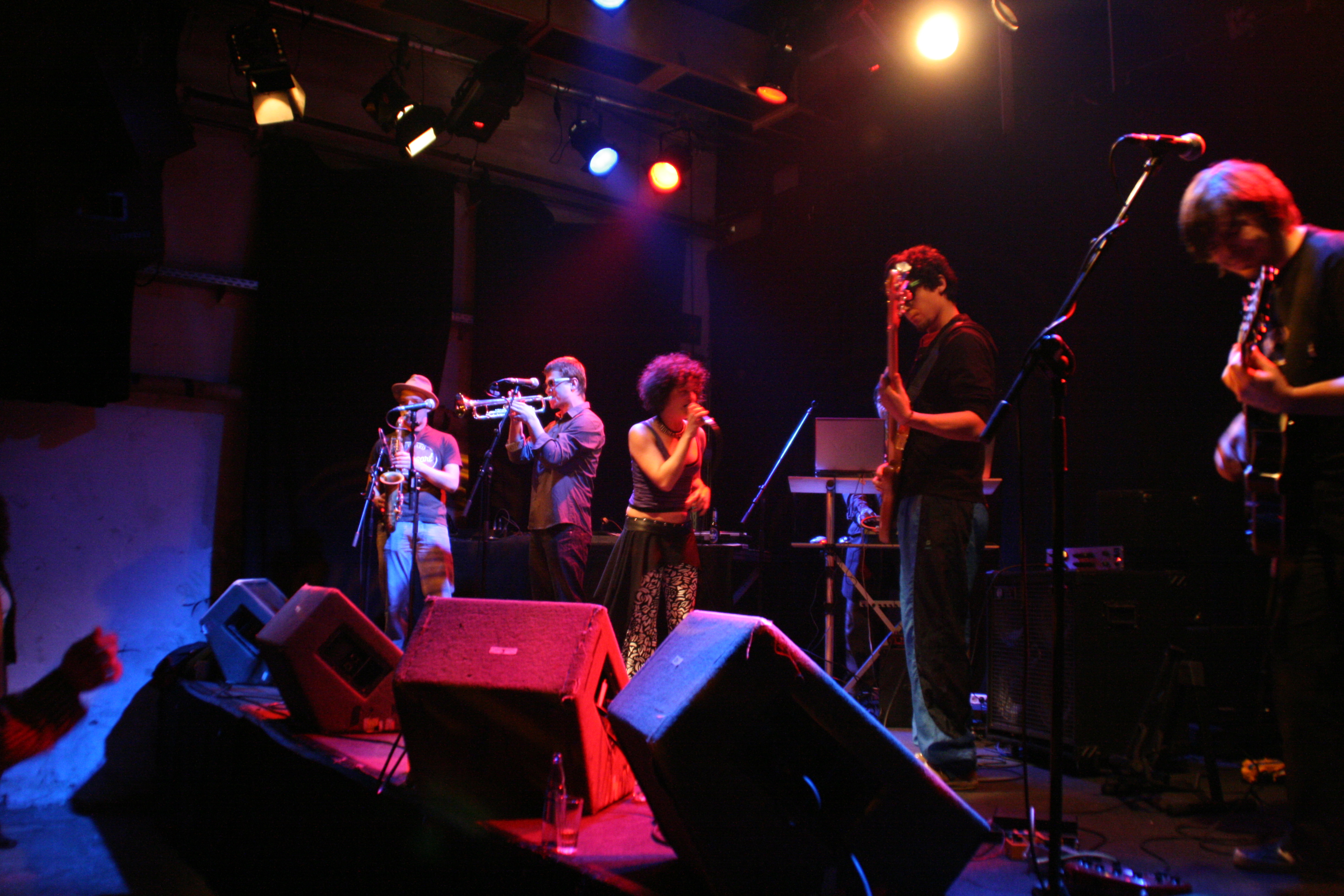
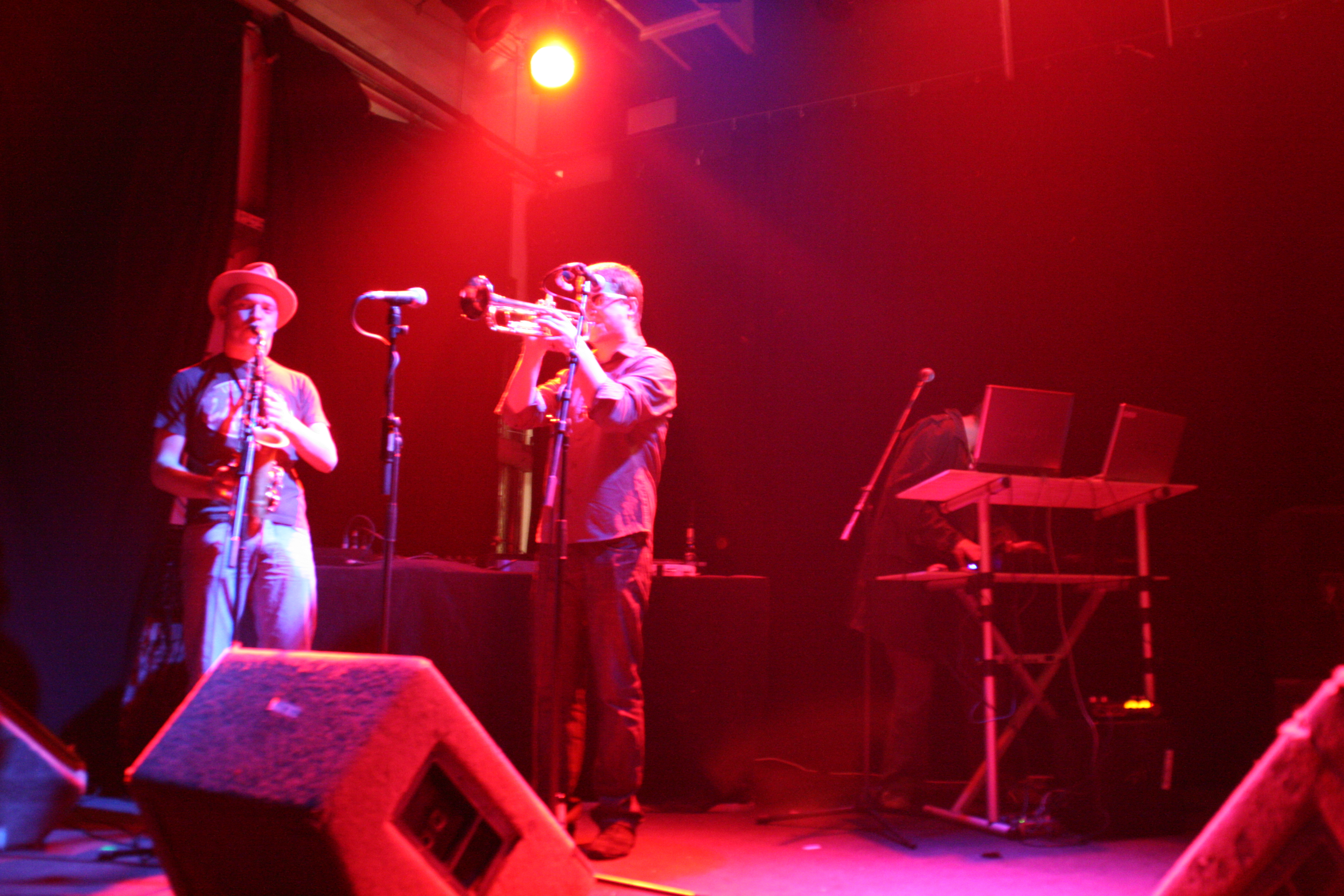
La Cherga © Ze Siket Skvirel (ZASPH!)

Oppaaaa! 😉

So here a little “aprecu” :

La Cherga © Ze Siket Skvirel (ZASPH!)

© Z Sikret Skvirel